Find an AdBlue® filling station

When Euro 4 emission standards began to be implemented, two exhaust treatment technologies were adopted by car manufacturers: Selective Catalytic Reduction (SCR) and Exhaust Gas Recirculation (EGR).The SCR technology offers advantages such as low equipment cost, durability, high exhaust treatment efficiency, low maintenance costs, and not overly high fuel and lubricant standards requirements, so it is commonly chosen by car manufacturers for use in commercial vehicles using diesel engines.
What is the SCR exhaust gas treatment system?
The Selective Catalytic Reduction (SCR) technology is the name of an active emission control system widely applied to diesel engines in both road and marine vehicles, reducing pollutant emissions into the environment. This technology requires the use of urea solution injected into the exhaust stream of diesel engines. The SCR exhaust treatment system is designed to allow chemical reactions to occur to eliminate harmful nitrogen oxides present in engine exhaust.

The catalyst used for the SCR system is called AdBlue or urea solution, also known as Diesel Exhaust Fluid (DEF). DEF initiates a chemical reaction that converts nitrogen oxides into nitrogen, water vapor, and a small amount of carbon dioxide (CO2), which are then emitted through the vehicle’s exhaust pipe.
Why is SCR important?
The SCR technology is the most advanced technology to date with low costs and optimized fuel savings.
In Vietnam, as of January 1, 2018, all imported or domestically assembled diesel engines must meet Euro 4 standards
As of January 1, 2022, all newly imported or domestically assembled diesel engines must meet Euro 5 emission standards, which reduce harmful emissions into the environment by over 85%.
SCR can reduce NOx emissions by up to 90%. It also reduces HC and CO emissions by 50-90% and PM (particulate matter) emissions by 30-50%. SCR systems can also be combined with diesel particulate filters to further reduce emissions of PM.
In the transportation industry, some companies with fleets equipped with SCR emission control systems have observed fuel savings of 3-5% compared to vehicles equipped with EGR systems.
Where is SCR used?
SCR has been used for many years in road transportation engines, maritime engines, industrial machinery, and construction vehicles…With increasingly stringent emission standards for the maritime industry, SCR systems are also being used on ships to meet IMO Tier 3 standards.

With its high economic and environmental benefits, the SCR exhaust treatment system is also recognized as a particularly useful emission control technology in meeting the emission standards of Euro 4 diesel engines and above.
Special considerations when using vehicles equipped with SCR systems?
When operating a vehicle equipped with an SCR system, you need to refill the Diesel Exhaust Fluid (DEF) as soon as the warning for low fluid level appears – This container is installed on the vehicle and completely independent of the diesel fuel tank. Users are extremely careful to avoid confusion between the diesel tank and the AdBlue solution, and vice versa.

The consumption of AdBlue depends on various factors: vehicle type, operating conditions, distance traveled, load, and driving style…
Where is the Diesel Exhaust Fluid (DEF) tank located?
The diesel engine exhaust treatment fluid is a mandatory catalyst for the SCR emission control system. When the AdBlue level drops to a low level, warning lights or sounds will appear on the vehicle to signal the need to refill this fluid.
Once the AdBlue level in the tank reaches a low threshold. The vehicle’s starting system may be disabled, or the engine power significantly reduced. Normal operation will resume after adding this catalyst. Nowadays, DEF (Diesel Exhaust Fluid), also known as AdBlue, refilling stations have become increasingly available at gas stations and retail points across the country, making it more accessible to refill this solution.
The DEF (Diesel Exhaust Fluid) tank, commonly referred to by drivers as urea solution or AdBlue, is usually located in the rear trunk near the engine in passenger vehicles, while in travel or commercial trucks, this tank is often placed alongside the diesel fuel tank. In hot and humid conditions like those in our country, it’s advisable to store DEF away from direct sunlight and heat sources.
What is AdBlue (DEF)?

*DEF (Diesel Exhaust Fluid) – A solution for treating diesel engine exhaust gases.
DEF is a non-toxic, colorless liquid primarily composed of deionized water (DI) and pure urea.
DEF solution is now widely available on the market with various packaging sizes and brands, offering a wide range of capacities and types. This solution is evaluated for quality according to the ISO 22241 standard.
See more: What is AdBlue exhaust gas treatment solution?
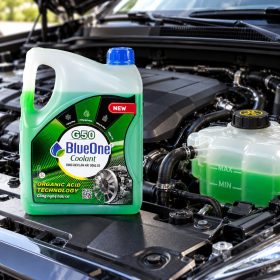
Diesel exhaust treatment solution DEF (AdBlue) can be easily purchased at gas stations, spare parts stores, Fanpage: BlueOne Viet Nam or contact directly by phone: 0938 579 589
Comparing the two exhaust gas treatment systems EGR and SCR.

Selective Catalytic Reduction (SCR) exhaust gas treatment system.
Advantages of the SCR system:
- Provides greater power.
- Fuel efficiency.
- Low maintenance costs.
- Increased engine durability.
- Longer engine oil change intervals.
- Does not require high-grade engine oil.
- The exhaust gas treatment system operates independently of the engine and has high stability.
- No strict requirements on the quality of diesel fuel.
Disadvantages of the SCR system:
- The overall weight of the vehicle’s engine increases due to the necessity of installing the SCR system along with the AdBlue tank.
- Incurring costs for purchasing AdBlue/urea solution.
- The SCR system comprises numerous electrical components that need maintenance.
Exhaust Gas Recirculation (EGR) system
Advantages of EGR:
- No need for AdBlue supplementation, suitable for vehicles operating in remote areas.
Disadvantages of EGR:
- Increased heat rejection, creating a need for greater cooling capacity.
- Larger engine cooling block.
- High operating temperature requires a larger heat exchanger.
- The complex recirculation exhaust gas equipment increases maintenance costs.
- Increased fuel consumption leads to higher operating costs.
- Requires high-grade lubricating oil.
- To ensure the engine operates smoothly, high-quality diesel fuel is required (most manufacturers recommend using diesel fuel with a sulfur content of 0.001S-V for Euro 4, 5 engines using EGR technology).
Some common symbols on Euro 4, 5, and 6 emission standard diesel engines.
AdBlue®: AdBlue is a registered trademark of the German Association of the Automotive Industry (VDA). Manufacturers of DEF need to obtain a license from VDA to use the AdBlue name on their product labels.
DEF (Diesel Exhaust Fluid) – Dung dịch xử lý khí thải động cơ diesel: It is a catalyst used for the Selective Catalytic Reduction (SCR) system, primarily consisting of pure urea and DI water.
DPF (Diesel Particulate Filter): This filter is located in the exhaust pipe, responsible for filtering and trapping particulate matter. This DPF filter is equipped on Euro 4 emission standard engines.
EGR (Exhaust Gas Recirculation) The EGR technology is currently used on engines compliant with Euro 4 emission standards and above. EGR is an exhaust gas recirculation system that helps reduce the emission of nitrogen oxides from diesel engines.
Emission standard Euro: Emission standards Euro are emission regulations for engines developed by the European Union, collectively referred to as “Euro.” Currently, there are 7 Euro emission standards that have been approved.
SCR (selective catalytic reduction) This is an exhaust gas treatment system used on diesel engines to reduce nitrogen oxides in exhaust gas. This system uses urea solution (also known as AdBlue) as a catalyst. Through chemical reactions occurring in the SCR system, toxic nitrogen oxides (NOx) are converted into environmentally friendly nitrogen (N2) and water (H2O) completely.
See More: AdBlue BlueOne Products